
How exercise can help
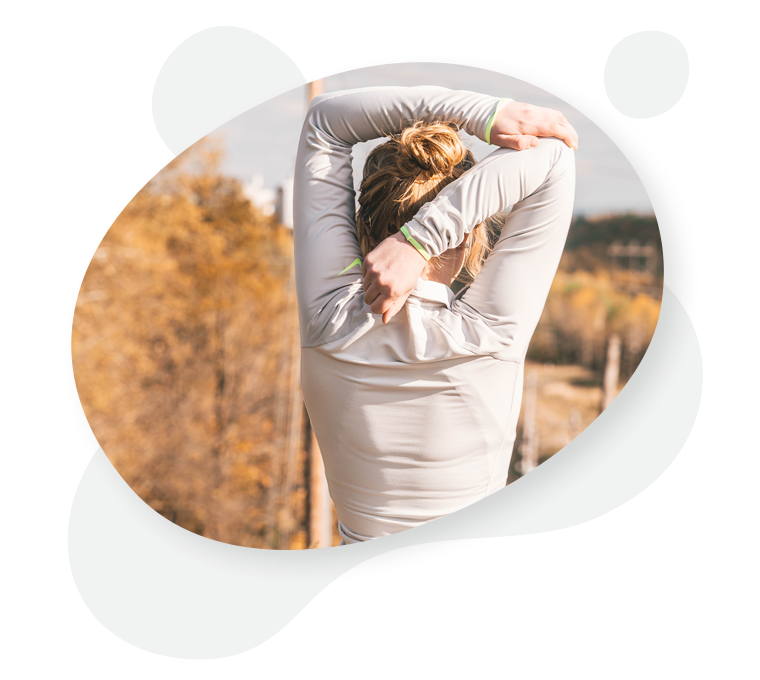
This information is general exercise information for people with RA and may not suit all individuals. Your healthcare professional is the best person to advise you on what activities are suitable for you depending on the severity of your condition and your treatment plan.
What benefits does exercise bring?
Staying active with regular exercise may help improve your rheumatoid arthritis (RA) symptoms.1,2
Regular physical activity can help you:1-3
- Reduce pain, stiffness and inflammation
- Strengthen your muscles
- Maintain joint function
- Improve mobility
- Combat fatigue
- Alleviate low mood
- Lose weight
- Keep your heart in good shape
- Make sure your bones stay strong
- Improve your sleep and your overall health
What exercises should I be doing?
Finding an exercise that you enjoy doing might help you keep it up regularly and build it into your everyday routine. Exercising with RA may be difficult, so stretching exercises and low-intensity exercises will probably be the best fit for you. Before you start any type of exercise, talk to your doctor. Alternatively, you could speak to an exercise physiologist for exercise recommendations or to put together an exercise plan.
Stretching exercises
Stretching exercises may help you strengthen muscles, improve posture and maintain flexibility,1 and the great news is that stretching has proven benefits for people with RA.4 If you experience morning stiffness, gentle stretches under a warm shower may help.1 A stretching program should be done consistently, targeting different parts of the body and different movements so that the whole body is stretched and moved daily.2,4 Below are a few stretching examples.
NECK TILT
Facing forwards, keep your shoulders down and tilt your head sideways, towards one side, until you feel a gentle stretch on one side of your neck. Hold for 5 seconds. Return your head to the centre and repeat on the opposite side.5
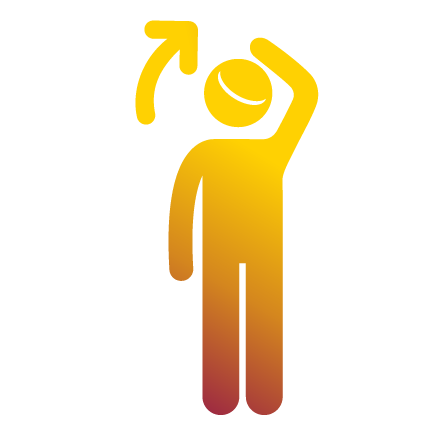
OVERHEAD SHOULDER STRETCH
Link your fingers together and raise both arms above your head with your palms facing to the sky.6
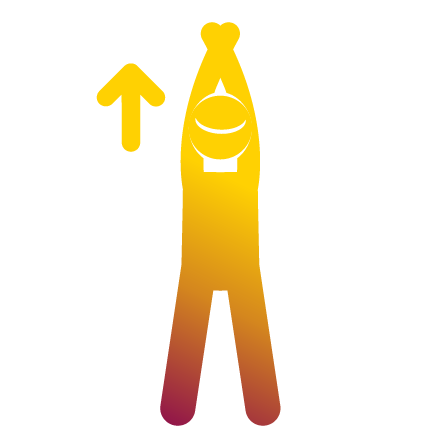
CROSSOVER SHOULDER STRETCH
Raise your arm up in front of you and move it across the front of your body. Place your hand on your elbow and pull your arm further across your body. Your elbow should be slightly bent, not locked.6

WRIST STRETCHING
Straighten one arm out in front of you, or rest it on the arm of a chair. Pretend your fingers are the tip of a pen and trace alphabet letters in the air. Try not to move your arm. Just bend at your wrist.7

HAND STRENGTHENING
Turn your hands over, palms facing up to the sky. Try to touch your thumb to the base of your little finger. Then relax. Try to tap the base of each finger with your thumb. Repeat five times.8
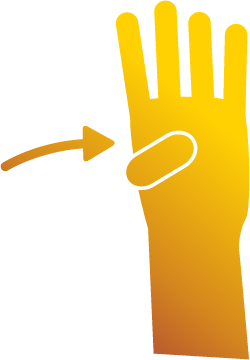
FOOT STRETCHES
Keeping your heel on the ground, pick up a towel or cloth by scrunching it between your toes. Aim to repeat this 10–20 times, but stop if you start to feel any signs of foot cramping.9
Sit down and rest the arch of your foot on a round object (e.g. a tennis ball). Roll the arch in all directions for a few minutes.9


To print off a copy of the stretching exercises or
to save a copy to your computer or phone, click here.
Disclaimer: Before starting exercise, speak with your doctor.
Low intensity exercises
Low-intensity exercises are a good start for people with RA as they do not stress the joints and are less likely to cause any pain. You should always warm up before exercising.10
It is recommended that you start your exercise with gentle movements to warm up your body, particularly your joints. Examples of warm-up activities include walking or doing flexibility exercises for at least 5 minutes.11,12
Examples of low-intensity exercises are:1,2,10
WALKING
While walking your heart rate and breathing rate should be faster but you should be able to hold a conversation while you walk.
Speak to your doctor about walking as a potential exercise and a suitable walking goal (step target and frequency) tailored to your needs.
Wear good athletic shoes that offer shock absorption and support for your feet.

SWIMMING
You usually feel weightless when in water, so swimming can put less pressure on your joints.

WATER AEROBICS
Being in the water may allow you to move more than you usually can on land without feeling pain.
Light water aerobics, such as walking in a pool may be beneficial if your condition is more active, or you are experiencing a flare.

RIDING A BIKE
Cycling, particularly on a stationary bike is a good way to get your joints moving without giving them too much stress, provided your seat is set to the right height and that you are using the correct resistance.
It is also important that people with RA cool down after exercising. You can do this by gradually slowing down with gentle, sustained movements before coming to a complete stop after your exercise.12
What if it hurts when I exercise?
The level and type of exercise that can be done varies from person to person. Some people may be able to do a variety of exercises, whereas others may only be able to do very low intensity exercises or some basic stretches.1
You may experience pain in your joints and muscles when first exercising. Exercise is an important part of managing RA, and it can be useful to speak with an exercise physiologist to work out the type and amount of exercise that is right for you and your condition. If the pain feels unusual or severe, or lasts for more than two hours after you have stopped an activity, you should speak to your doctor.1
Speak with your doctor about how heat and cold packs may help. They have been known to minimise any swelling or pain after exercising. Cold packs can help numb the feelings of pain, and heat packs can help relax your muscles and joints.13 Try to plan your exercise for times when you are experiencing the least pain — generally when you are least tired and your treatment is having the maximum effect.1
Exercising when you have flares can be tough, and can make even the most gentle exercises seem difficult. If you are having issues with this, speak to your doctor. You can also seek the advice of an exercise physiologist to find out what they would recommend for when you experience a flare.
References: 1. Arthritis Australia. Taking control of your rheumatoid arthritis. Available from: arthritisaustralia.com.au/types-of-arthritis/rheumatoid-arthritis/ Accessed: August 2025. 2. Arthritis Foundation. Building a walking workout. Available from: arthritis.org/health-wellness/healthy-living/physical-activity/walking/building-a-walking-workout Accessed: August 2025. 3. Arthritis Foundation. How to beat arthritis fatigue. Available from: arthritis.org/health-wellness/healthy-living/managing-pain/fatigue-sleep/how-to-beat-arthritis-fatigue Accessed: August 2025. 4. Rheumatoid Arthritis.net. Exercise. Available from: rheumatoidarthritis.net/exercise Accessed: August 2025. 5. Versus Arthritis. Neck pain. Available from: versusarthritis.org/about-arthritis/conditions/neck-pain/ Accessed: August 2055. 6. Arthritis Health. Shoulder stretches. Available from: arthritis-health.com/treatment/exercise/shoulder-stretches Accessed: August 2025. 7. National Rheumatoid Arthritis Society (UK). Exercise videos. Available from: nras.org.uk/exercise-videos Accessed: August 2025. 8. WebMD. Flexibility exercises to help your rheumatoid arthritis. Available from: webmd.com/rheumatoid-arthritis/features/flexibility-exercises-for-ra#2 Accessed: August 2025. 9. Versus Arthritis. Foot and ankle pain. Available from: versusarthritis.org/about-arthritis/conditions/foot-and-ankle-pain Accessed: August 2025. 10. Everyday Health. How to exercise with rheumatoid arthritis. Available from: everydayhealth.com/hs/rheumatoid-arthritis-treatment-management/exercise-tips/ Accessed: August 2025. 11. Arthritis Foundation. Exercise and strength training with arthritis. Available from: arthritis.org/health-wellness/healthy-living/physical-activity/getting-started/exercise-and-strength-training-with-arthritis Accessed: August 2025. 12. Better Health Channel. Arthritis and exercise. Available from: betterhealth.vic.gov.au/health/conditionsandtreatments/arthritis-and-exercise Accessed: August 2025. 13. Rheumatoid Arthritis Support Network. RA pain: What is the best pain relief for rheumatoid arthritis? Available from: rheumatoidarthritis.org/living-with-ra/pain-management/ Accessed: August 2025. AC-005092-00. AU-RNQ-250080. August 2025.