
How exercise can help

This information is general exercise information for people with axial spondyloarthritis (ax-SpA) and may not suit all individuals. Your healthcare professional is the best person to advise you on what activities are suitable for you depending on the severity of your condition and your treatment plan.
What benefits does exercise bring?
Staying active with regular exercise can help improve your symptoms.1,2
Regular physical activity can help you: 1-3
- Reduce pain and stiffness
- Strengthen your muscles
- Maintain good posture
- Maintain mobility in your spine
- Combat fatigue
- Alleviate low mood
- Lose weight
- Keep your heart in good shape
- Improve your sleep and your overall health
What exercises should I be doing?
Finding an exercise that you enjoy doing might help you keep it up regularly and build it into your everyday routine. Stretching, low-intensity aerobics, breathing exercises and strengthening exercises are recommended for people with ax-SpA.2,4 Before you start any type of exercise, talk to your doctor. Alternatively, you could speak to an exercise physiologist for exercise recommendations or to put together an exercise plan.1
Stretching exercises
Stretching exercises may improve your posture and may help to maintain mobility in the spine and improve flexibility.1,2 A stretching program should be done consistently, targeting different parts of the body and different movements so that the whole body is stretched and moved daily. Below are a few stretching examples:5
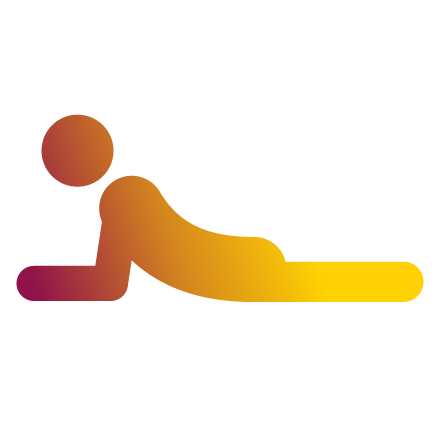
Prone on elbows
- Lying on your stomach, slowly lift yourself up on your elbows so your upper body is off the ground.
- Keep your hips and legs on the floor.
- If you can, straighten your arms to the front.
- Hold for 10–20 seconds. Return to the start position and repeat.
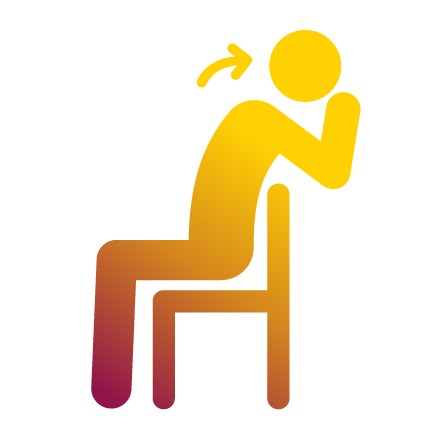
Seated thoracic extension
- Sitting upright on a chair with your feet flat on the floor, place your hands behind your head with elbows out to the side.
- While keeping your head still, slowly roll the top of your spine over the back of the chair.
- Hold for 5–10 seconds. Return to the start position and repeat.
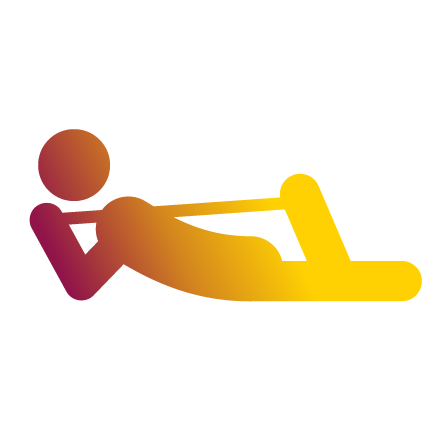
Quadricep stretch
- Lying on your stomach, loop a strap or belt around the top of one foot.
- Slowly pull the strap or belt forward, over your shoulder, until you feel a stretch in your thigh.
- Hold for 10–20 seconds. Return to the start position and repeat with the other leg.
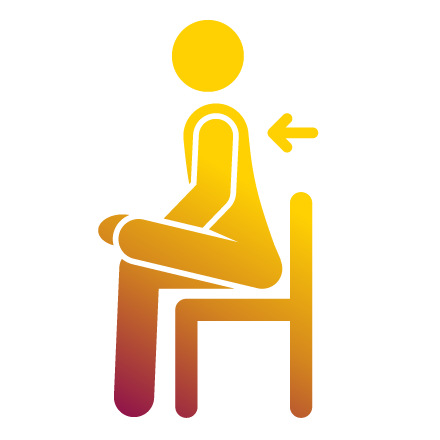
Seated figure four stretch
- Sitting upright on a chair with your feet flat on the floor, lift your right leg and place it on top of your left thigh, just above your knee.
- Your legs should form the shape of number ‘4’.
- While keeping your spine straight, slowly hinge forward.
- Hold for 10–20 seconds. Return to the start position and repeat with the other leg.
Plank
- Lying on your stomach with your forearms on the floor, tighten your core muscles and lift your hips off the floor.
- You can either stay on your elbows or straighten your arms.
- Tighten your buttock muscles and keep your body straight off the floor.
- Hold for 10–20 seconds. Return to the start position and repeat.

To print off a copy of the stretching exercises or to save a copy to your computer or phone, click on the button below. Disclaimer: Before starting exercise, speak with your doctor.
Aerobic exercises
Aerobic exercises are activities that increase blood flow through the heart. They may help to improve breathing function, endurance and mood, and lower disease activity, pain and fatigue in people with ax-SpA.2
Warming up is important to improve circulation and increase body temperature so the joints and muscles are less stiff, making exercise easier and reducing risk of injury. Examples of warm–up activities include walking at half speed or performing flexibility exercises for 10–15 minutes.4
Examples of aerobic exercises are: 1,6
WALKING
- While walking your heart rate and breathing rate should be faster but you should be able to hold a conversation while you walk.
- Speak to your doctor about walking as a potential exercise and suitable walking goal (step target and frequency) tailored to your needs.
- Wear good athletic shoes that offer shock absorption and support for your feet.

SWIMMING
You usually feel weightless when in water, so swimming can put less pressure on your joints.

WATER AEROBICS
- Being in the water may allow you to move more than you usually can on land without feeling pain.
- Light water aerobics, such as walking in a pool may be beneficial if your condition is more active, or you are experiencing a flare.

RIDING A BIKE
Cycling, particularly on a stationary bike is a good way to get your joints moving without giving them too much stress, provided your seat is set to the right height and that you are using the correct resistance.

It is also important to cool down after exercising. Cooling down returns your heart rate close to normal, which can prevent your blood pressure from dropping too suddenly and making you feel sick or dizzy. Examples of cool-down activities include gradually slowing down your walking, lifting light weights, or doing stretching exercises. Stretching may have the added benefit of reducing muscle soreness after exercise.5
Breathing exercises
Breathing exercises may help to improve mobility and chest expansion. It is important to include these exercises in your exercise regimen or routine. Simply follow and repeat these quick steps:4
Breathe in deeply, allowing your chest to expand as much as possible.

Hold the breath for 3 seconds.

Exhale slowly through your mouth.

Rest for 3 seconds.

Strengthening Exercises
Strengthening exercises may help to improve the performance of muscles, which in turn will help you to move efficiently and safely and support good posture. For people with ax-SpA, some of the most important muscles to strengthen are the abdominal and core muscles, which support the spine. Strengthening these muscles may help to reduce stress on the spine and therefore minimise back pain.2
Examples of strengthening exercises are: 7
BRIDGE
Lying on your back, bend the knees and place feet flat on the floor. Lift the pelvis and the lower back off the floor. Hold for 5 seconds, then lower down slowly.

HIP AND PELVIS ROTATION
Lie on your back with hands above your head. Bend your knees and roll them slowly to one side. Hold for 5 seconds and then return the knees to centre. Repeat 5 times on each side

SUPERMAN
Kneel on the floor on all fours. Lift your right arm and left leg until they are parallel to the floor. Lower and repeat with the other arm and leg. Repeat 5 times on each side.

What if it hurts when I exercise?
The level and type of exercise that can be done varies from person to person. Some people may be able to do a variety of exercises, whereas others may only be able to do very low-intensity exercises or some basic stretches.1
You may experience pain in your joints and muscles when first exercising. Exercise is an important part of managing your condition, and it can be useful to speak with an exercise physiologist to work out the type and amount of exercise that is right for you and your condition. If the pain feels unusual or severe or lasts for more than two hours after you have stopped an activity, you should speak to your doctor.1
Speak with your doctor about how heat and cold packs may help. They have been known to minimise swelling or pain after exercising.1 Cold packs can help numb the feelings of pain, and heat packs can help relax your muscles and joints.8 Try to plan your exercise for times when you are experiencing the least pain — generally when you are least tired and your treatment is having the maximum effect.1
Exercising when you have flares can be tough, and can make even the most gentle exercises seem difficult. If you are having issues with this, speak to your doctor. You can also seek the advice of an exercise physiologist to find out what they would recommend for when you experience a flare.
References: 1. Arthritis Australia. Taking control of your ankylosing spondylitis. Available at: arthritisaustralia.com.au/wordpress/wp-content/uploads/2020/09/Ankylosing-Spondylitis-WEB-2019.pdf [Accessed August 2025]. 2. Spondylitis Association of America. Exercise. Available at: https://www.spondylitis.org/about-spondylitis/treatment-information/exercise/ [Accessed August 2025]. 3. Arthritis Foundation. How to beat arthritis fatigue. Available at: https://www.arthritis.org/health-wellness/healthy-living/managing-pain/fatigue-sleep/how-to-beat-arthritis-fatigue [Accessed August 2025]. 4. UpToDate. Patient education: Arthritis and exercise (Beyond the Basics). Available at: https://www.uptodate.com/contents/arthritis-and-exercise-beyond-the-basics [Accessed October 2023]. 5. Creaky Joints. 6 daily stretches for ankylosing spondylitis that can help ease pain. Available at: https://creakyjoints.org/about-arthritis/axial-spondyloarthritis/axspa-healthy-living/ankylosing-spondylitis-stretches-exercises/ [Accessed August 2025]. 6. Arthritis Foundation. Building a walking workout. Available at: https://www.arthritis.org/health-wellness/healthy-living/physical-activity/walking/building-a-walking-workout [Accessed August 2025]. 7. Spondylitis Association of America. Sample spondyloarthritis exercise program. Available at: https://www.spondylitis.org/wp-content/uploads/2020/12/SAA_Exercise_Flyer_8.5x11_Update_WEB.pdf [Accessed August 2025]. 8. Arthritis Australia. Dealing with pain. Available at: https://www.arthritisaustralia.com.au/managing-arthritis/living-with-arthritis/dealing-with-pain/ [Accessed August 2025]. AC-005092-00. AU-RNQ-250084. August 2025.